



 morcadia
Morcadia
A continent made around 1400 B.G. by Dagma and the Seraph Luciel, and populated with humans, demi-humans, elves and dwarves. Then the Gates opened, the calendar reset to zero, and three interface spirits became the only way anyone touches power at all. Two thousand six hundred years later the continent runs on a ranking system, a caste system, and a great deal of quiet cruelty that everyone has agreed to call order.
The Gates
Year 0 marks the Opening of the Gates, which established three interface spirits as a universal power system. They are neutral constructs that filter divine energy — not gods, not patrons, just the plumbing. Everyone is born leaning toward one, sometimes two.
Phoenix
StrengthPower, endurance, rebirth. The spirit you lean on when the answer is to keep standing.
Leviathan
IntelligenceWisdom, knowledge, depth. Half of the Splitting Moon technique, and most of what makes a strategist dangerous.
Dragon
DexterityMastery, discipline, control. The other half — precision that lets a small blade cut a large problem.
Which spirit answers you depends on lineage, luck, and proximity to a Gate during pregnancy. That last one is why every national capital was built close to an ancient Gate, despite the standing risk of a higher-level Gate tearing open on top of the city. Children born and raised near one grow up measurably stronger and sharper. Myalin Cepha was born beside Luminant's Gate — the site Luciel first descended upon, and the most powerful on the continent — and was effectively marked from birth.
Modifieds
Abilities can be implanted while a person is still forming in the womb — usually to continue a lineage of warriors, or to fit someone to a profession before they can object. Sometimes for much crueller reasons. Sponging is a passive that makes its bearer absorb the wounds and pain of whoever stands nearest, which turns a human being into a rapid-action med kit for somebody more important.
People made this way are called Modifieds. Opinion is split, and the split is not really about ethics — it is about who benefits. It is eugenics, and the continent has a comfortable vocabulary for not saying so.
Power Tiers
Tier 1
Interface ConnectionThe baseline, open to anyone. Caps at A / A+. 99.9% of every ranked person alive never leaves it.
Tier 1.5
Maxxed InterfaceAligning completely with one base interface unlocks more. S- or S rank with no deity involved at all. Vanishingly rare.
Tier 2
Direct Deity PactA personal pact with a real god from another world, through a Gate site. Ceiling rises to S / S+. Requires extraordinary compatibility, extreme circumstance, and a deity that chooses to answer — 10 to 15 in 2,608 years.
Tier 3
Pantheon AnchorPermanent conduits for entire divine realms. Walking Gates. Only Dagma and Luciel qualify, and they made the place.
The Radiant Ranking System
| Rank | What it means | Share of population |
|---|---|---|
| F | Civilian. Untrained, no interface connection at all. | 81.6% · 285.6M |
| E- → E+ | Initiated to Trained. Months to a year in; ready for professional work. | 12.5% · 43.75M |
| D- → D+ | Competent to Seasoned. Working soldiers and squad leaders. A D can tear through a house. | 4.7% · 16.45M |
| C- → C+ | Veteran to Expert. Career adventurers, building-level. The ceiling for most dedicated fighters. C- is the minimum for a graduated Arbiter — below it you get city guard work. | 1.11% · 3.9M |
| B- → B+ | Past the talent wall. Guild elites, knight captains, small-town-level. 9 to 18 years in. | 0.089% · 310K |
| A- → A+ | Nationally known to Pre-Eminent. City-block to city-level. At or beyond the Tier 1 ceiling. 18 to 25+ years. | 0.0039% · ~13.5K |
| S- | Threshold. Beyond Tier 1 limits, confirmed. Power source now matters more than years trained. | ~60 people |
| S | Transcendent. Walking catastrophes, large-city-level. | 15–25 |
| S+ · Celestial | Mythical. Deep Tier 2 only. Walking natural disasters measured in multiple large cities. | 3–5 |
| Over‑Celestial | Country-level. Only ever Zazel. | 1 |
Current S+ ranks: Myalin Cepha (Luminant), Akari (Crimson Covenant), Kosetsu (Kazehara, unaffiliated).
The Nine Nations
Luminant Sanctum
Theocratic east · 95MHuman-purist theocracy running a five-tier caste system and annual Ascension Trials. Fail one and you are demoted; fail as Shadowed and you are exiled or executed.
Clearskies
Meritocratic west · 71MNeutral trade partner to everyone, author of the continental currency, and the one nation offering demi-humans full equality.
Kazehara
Monastic south-central · 50MBlade and soul as one. Home of the Splitting Moon technique — and, as of 2608, of the conspiracy that murdered the man who created it.
Crimson Covenant
Demi-human north · 41MAkari's "compassionate tyranny". Mandatory Nine-Tails worship, re-education camps in Oniyama, bound agents in every other kingdom.
Silverleaf
Elven southeast · 26MA puppet state. Lord Mider has ruled 102 years as the saviour who rebuilt from the ashes he arranged.
Vorantine Dominion
Dwarven northwest · 24MCraftsmen, the Ever-Forge, and a contract system holding roughly 40% of the population in permanent legal bondage.
Mirror Kingdoms
Espionage southwest · 18MHeavy influence from Ix, god of trickery. Temist's coup landed in 2596.
The Smokes
Contested buffer · 14MGray Syndicate territory in all but name, with Akari running rescue operations through agents.
The Wastes
Lawless centre · 1MFormerly Zero, the continental trade hub, until Zazel took it in 2447 and held it 59 years. Nullspace sits at its heart — the strongest Gate site on the continent, where reality frays and every pantheon is reachable at once.
Gods, And Where They Get In
The Tris deities physically moved to Morcadia after the destruction of their home realm. Silva, the fallen and blinded Goddess of Light, arrived only centuries ago, having drifted in the void for millennia because she lacked the power to cross sooner; she now exists entirely inside Myalin Cepha as her vessel. Vord holds war and valour, Artes the untamed wilds and the care of children, Alerion cosmic secrets, Moran death and dreams, Thumar the anvil, Serylda ocean and camaraderie, Brida community and compassion. Ix, chaos and luck, is rumoured the strongest of them all.
Others reach through the Gates during upheaval without belonging to that pantheon at all: Mat the Truth, who endorses Broca Sulci's refusal to flinch — which Broca has decided means an endorsement of human supremacy. The distinction is everything, and she will never see it. Nocthari, the Endless Thirst, whose one confirmed pact left Myldred ageless and blood-sustained. Ares, raw carnage where Vord is strategy — stronger than the Tris gods but spread across too many bonds to speak to any of them.
Gate sites
Nullspace — the Wastes. Strongest site on the continent. Where Zazel was slain in 2512.
Celestia's Rest — Luminant. Where Iris first reached Alerion and became the first S+.
Shiratani Ruins — Crimson. Where Zazel was summoned in 2447. Akari built her capital on top of it.
Silent Peaks — Kazehara. Moran's ground. Bhol's soul may still be lingering.
Ever-Forge — Vorantine. Burning continuously for ~2,000 years.
The Burning Edge — Silverleaf. The third of the island Basalia's grief consumed.
How It Got Here
- ~1400 B.G.Dagma and the Seraph Luciel make the continent and populate it.
- Year 0The Gates open. Phoenix, Leviathan and Dragon become the universal power system. The calendar restarts.
- 712 A.G.Iris founds the Radiant Ranking System, having become the first S+ rank through a pact with Alerion.
- 2298 A.G.The Purge. Luminant Sanctum expels every demi-human; those who do not flee are killed or enslaved. Refugees scatter to Crimson Covenant and Clearskies. Human-purist doctrine becomes national identity.
- 2447 A.G.Crimson Covenant summons Zazel, over Hansha and Akari's objections. He destroys a third of Crimson immediately. Akari's children die. He takes Zero and begins the harvest.
- 2447–2506Fifty-nine years of dark reign. Trade collapses. Zazel compresses harvested souls into roughly 200 Devoured. Akari retreats into the deep forests; Hansha is lost and drifts to Vorantine.
- 2506 A.G.The Tragedy of Silverleaf. With the world watching Zazel, royal advisor Lord Mider draws Queen Basalia away on a false mission and has King Melan and both royal children killed. Basalia returns, and her grief manifests as Phoenix fire that consumes a quarter of the capital. She vanishes believing herself a monster. Mider seizes power as the saviour who rebuilt from the ashes.
- 2509–2512The final campaign. Thousands of A-ranks against 200 Devoured, ground out over years. Each Devoured killed bleeds its energy into the land instead of back to Zazel.
- 2512 A.G.Zazel falls. Bhol strikes the crucial blow and dies with him. Two S-ranks perish; the A-rank dead number in the thousands. Zero becomes the Wastes permanently, and Nullspace becomes the most spiritually volatile point on the continent.
- 2547 A.G.Akari's return. A century of isolation, grief and a Tier 2 bond with Artes have changed her: mortals cannot be trusted with free will, because the summoning that killed her children was democratic — the people chose the catastrophe. She takes Crimson Covenant and builds Eternity's Rest atop the ruins where they died.
- 2596–2606Temist's coup in the Mirror Kingdoms. Broca connects with Mat during a dungeon break. Aria Carter is captured by Akari in 2603 and reappears in 2606 as her devoted servant.
- 2608 A.G.Now. Master Tohoku Sunimi is murdered by a Silver Pact conspiracy, and Haiyan hunts an innocent ex-partner for it. Thallia researches Zazel's resurrection out in the Wastes. Luminant and Crimson circle each other without ever quite touching.
 the well
The Well
It was once said a fourth world war would be fought with sticks and stones. After the third one left Europe hungry, wounded and broken, the Goddess took pity — but humanity being what it is, and free will being the thing she refused to take, she laid down a single blessing that exhausted her completely. That blessing is the Well. Seventy years on, civilisation has rebuilt around it, and around the industries that grew up to control and exploit it.
How The Well Works
Think of it as a gift sack for humanity. Those who struggle, who get a rough start, are the ones who can reach in — a child starving to death may reach into the sack and be fed. A freezing child might simply will a blanket into existence. The catch is that will is the whole mechanism: those of exceptional will drag out the biggest and heaviest things in the sack.
Born from hardship
The pricePowers come out of childhood trauma. Strength scales with how bad it was, multiplied by the will behind it.
Most get a trick
The medianNearly everyone who reaches in pulls out something minor. A one-off. A small, unglamorous knack.
Twice is myth
The ceilingA second reach into the Well is the stuff of legend. A third is considered statistically impossible.
Doubt closes it
The cruel partThe more you rationalise the Well, the harder it is to reach through at all. The comfortable and the educated rarely awaken. The desperate and the broken awaken constantly. Power flows up from the bottom.
On the Goddess
She thinks of this as the solution that let humanity make a comeback, and she does not interfere. Things play out according to the free will of humans, which was the entire point.
This does not mean humanity agreed with her. She is the single divine source of the Well, and the object of both reverence and, in some quarters, real hatred.
The Power Industry
Dream Catchers
DevicesMachines that strip or steal powers outright, straight off a person.
Forced-trauma programs
Industrialised awakeningManufacturing powers in children, on purpose, at scale, for military and organisational use.
Lineage programs
EugenicsBreeding for high-willpower bloodlines. Will is half the equation, and it breeds true.
Suppression tech
ContainmentWhatever it takes to keep the dangerous ones in check.
Hero organisations operate as independent groups, not government-backed, which makes oversight inconsistent and accountability scarce. After seventy years of world-ending fallout, people go to deplorable extremes — heroes included. Sacrifice a few to save a lot. That is the moral floor of the setting: not cartoon villainy, but triage by a world too poor and too endangered to keep its hands clean.
The Map So Far
Greece
Aris Telos · council-governedProsperous reclaimed state. Accepts immigration, processes prisoners through due process, places powered citizens in well-compensated protective roles. Functionally the good state — despite its leader's private views.
Italy
Julia Evola · militant traditionalistThe rival-mirror next door in the Mediterranean. Regulate-and-integrate against eradicate-and-purify is the central fault line of the whole map.
The rest of Europe is open ground. The political units are reclaimed city-states and nations rebuilt from the scraps of the old ones; calling someone German or English now describes where their blood came from, not where they can vote.
The Six Factions
Mina Nicki · "Overs"
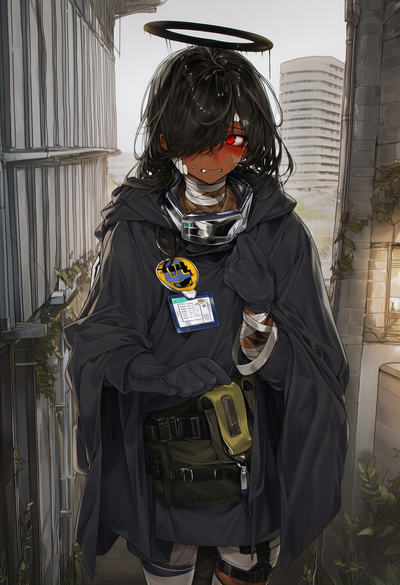
Nietzsche · pro-powers, affirmationEmbrace the trauma, beat it, make the power yours. Commands ghosts and shadows — a power that surged at four, after the deaths of her father and infant brother, when wishing the ghosts away turned into learning to order them about. She left Artie hard: where Artie sees the trauma behind powers as a curse, Mina sees fuel. She is also sickly, permanently exhausted, and privately certain she will not see fifty. The life-affirmer whose own body is failing.
Artie Hewher · "Eternal Justice"
Schopenhauer · pessimist, pro-powers by attritionEverything is garbage; if you have a power your life is probably ass, but at least you survive it. No romanticism, no arc. She regenerates from nearly anything — drawn at fourteen from a vow never to take her own life, made in the moment she found her mother's body. She remains absolute on that one point and cynical about every other.
Bertha Spencer · "The Fittest"
Spencer · pro-powers, supremacistEveryone is free to act, provided they are strong enough to act. Her following deliberately causes chaos hoping the pressure makes bystanders awaken. Her power is adaptation — never permanent, always the direct counter to whatever is currently killing her. She was the only one of nine children to reach adulthood.
Europa Spear · "The Return"
Spir · anti-powers, softPowers are a corruption of the authentic self — a wound the Well dressed up as a gift. Reject them; return to who you really were. She collars her own ability rather than use it. Deliberately still a mystery.
Julia Evola · "Ride the Tiger"
Evola · anti-powers, militantThe furthest edge of the anti-powers position, and the closest thing here to a classic villain. She hates the Goddess for pitying humanity — not for the gift itself but for the dependence on a gift instead of forging strength from will. She fought young with no power at all, on training and physical stats alone, and became a respected officer; a disillusioning turn at art soured her on modernity entirely. Two decades of climbing later she runs Italy.
Aris Telos · "Syllogia"
Aristotle · steward, powerless by birthA power is neither blessing nor curse, only what training makes of it. Regulate rather than worship or reject, and never break children to make soldiers — the golden mean between Mina and Europa. She carries real flaws: chauvinism about her own lineage, traditional views on gender roles, positions on captured rivals she has never acted on. Her councils check her, and that is the point of her.
Through-Lines
Mentor splits
RecurringLeaders keep forming by breaking from a teacher. Artie to Mina. Plertou to Aris.
Breaking from family faith
RecurringMina's devout mother. Julia's Goddess-worshipping family — a rebellion she chose rather than inherited.
The surviving parent
A spectrumArtie, whose bond was destroyed. Bertha, dutiful but walled off. Mina, warm despite clashing beliefs.
Powerless leaders
RecurringAris and Julia both run nations with no power of their own. Authority from will, intellect and institution alone.